
Introduction
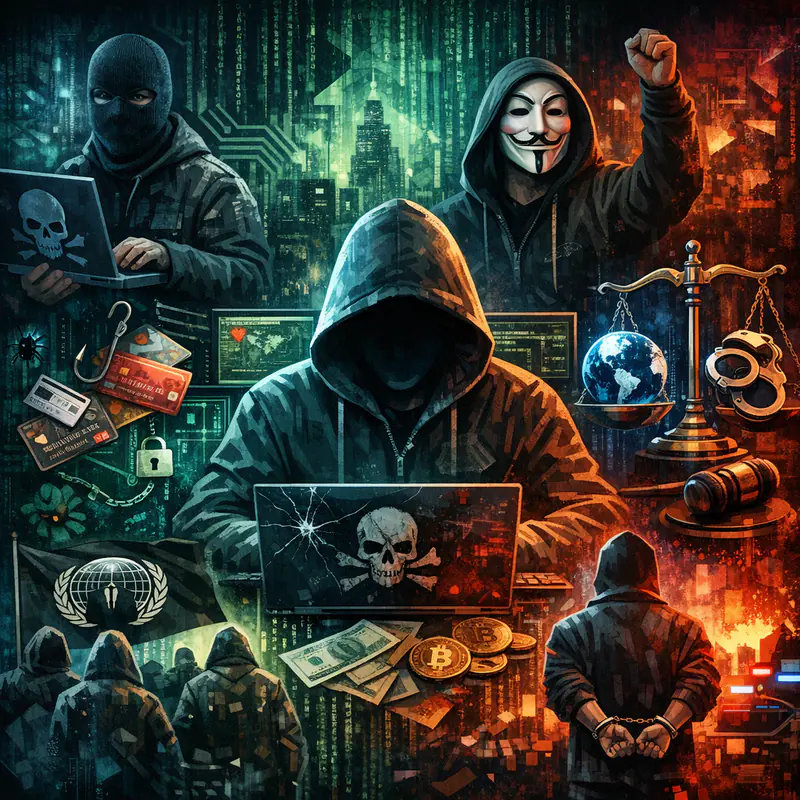
In the era of rapid digitalization, the internet has become a battlefield for different agendas. Cybercrime, hacktivism, and the pursuit of online justice have transformed the digital landscape into a realm of conflict and resolution. This article explores these intertwined digital phenomena, offering an in-depth perspective on the cyber threats we face and the ways we combat them for the sake of justice.
The Rise of Cybercrime
With an increasing dependence on digital platforms, cybercrime has emerged as a significant threat. Cybercriminals exploit vulnerabilities in systems, stealing personal information, manipulating data, and disrupting operations for financial gain or malicious intent. For instance, the WannaCry ransomware attack in 2017 affected over 200,000 computers worldwide, crippling healthcare systems and causing billions in damages.
Moreover, cybercrime has evolved with technology. Sophisticated techniques like Phishing, where an attacker deceives the user into revealing sensitive data, have become commonplace. An example is the 2016 attack on the Democratic National Committee, where emails were leaked after a successful phishing expedition.
Hacktivism: Digital Activism
Hacktivism, a portmanteau of 'hacking' and 'activism,' is the use of hacking to promote or advance political or social causes. Unlike cybercriminals, hacktivists are not primarily driven by personal gain but by the desire to draw attention to issues and effect change. The infamous group Anonymous, known for their Guy Fawkes masks, has conducted numerous high-profile attacks to protest against perceived injustices.
However, the ethical implications of hacktivism are contentious. While some view it as a form of civil disobedience in the digital age, others see it as a violation of privacy and law. The 2010 WikiLeaks incident, where thousands of classified documents were published, sparked fierce debates about transparency, security, and the public's right to know.
The Battle for Online Justice
The fight against cybercrime and the ethical dilemmas surrounding hacktivism are part of a broader struggle for online justice. This involves protecting users' rights, ensuring data privacy, and maintaining the internet as a safe and equitable space. Organizations like the Electronic Frontier Foundation (EFF) work tirelessly to defend civil liberties in the digital world.
Online justice also entails holding tech giants accountable. For example, Facebook's Cambridge Analytica scandal highlighted the necessity of stringent data protection laws. In the aftermath, there were significant calls for better regulation of tech companies and their handling of user data.
The Role of Cybersecurity
Effective cybersecurity is vital in combating cybercrime and upholding online justice. This field involves protecting systems and networks from digital attacks. High-profile breaches like the Equifax hack, which exposed the personal data of 147 million people, underscore the importance of robust cybersecurity measures.
Moreover, cybersecurity extends beyond technological solutions. It also involves education and awareness, as users are often the weakest link in security chains. Initiatives like National Cybersecurity Awareness Month aim to empower individuals and organizations to improve their cyber resilience.
Conclusion
The digital age has brought unprecedented opportunities and challenges. As we navigate the complexities of cybercrime, hacktivism, and the pursuit of online justice, understanding these issues becomes crucial. Technology is a double-edged sword, and harnessing its potential requires a vigilant approach to cybersecurity and a nuanced understanding of digital ethics.